
Buying Thai Rice in Bulk: What Makes an Order Good Value?
Two rice quotations arrive in your inbox. Both describe Thai white rice, both offer the same bag size, and one costs less per tonne. Is the cheaper offer the better purchase?
Only if the products meet the same requirements.
For a wholesaler, value depends on what customers will buy and the margin left after delivery. For a restaurant supplier, cooking performance also matters. For a food manufacturer, consistency may be more important than the appearance of individual grains.
Buying Thai rice in bulk requires looking beyond the headline price. This guide explains how to assess an order from the perspective of the business that will receive, use, or resell it. Buying Thai rice in bulk
Define What a Successful Purchase Looks Like
Before requesting a quotation, write a short description of the result you need.
For example:
- “We supply restaurants that need consistent rice for daily meal service.”
- “We sell packaged jasmine rice through independent grocery stores.”
- “We require broken rice for processing, with agreed technical specifications.”
- “We distribute 25 kg bags to wholesalers serving a price-sensitive market.”
Each statement gives the supplier more useful information than a request for “the best Thai rice.”
Your buying specification should connect the product to the customer. A visually attractive whole grain may matter greatly on a retail shelf, while a processor may judge the same shipment by how it performs in production.
Compare Rice Varieties by Their Role in Your Range
A larger product selection is useful only when each variety serves a clear purpose.
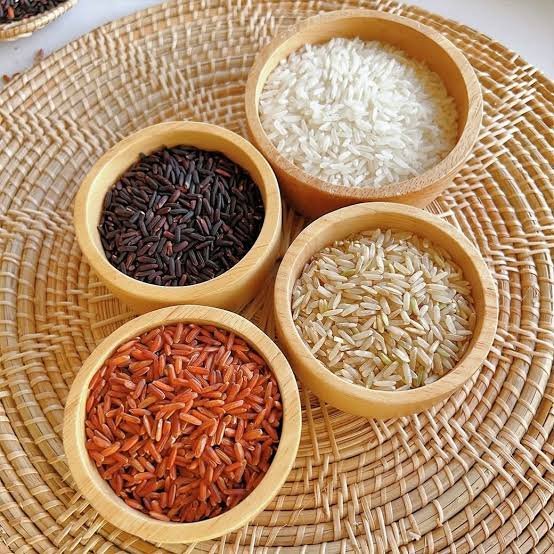
Jasmine rice offers fragrance and a soft cooked texture for buyers developing an aromatic rice range.
White rice provides options for everyday retail, catering, and wholesale distribution, with the particular grade determining the agreed grain composition.
Glutinous rice suits applications that require its characteristic sticky texture, including traditional dishes and desserts.
Brown rice and red cargo rice can serve customers looking for bran-retaining varieties with a firmer or chewier texture.
Broken rice can suit selected food-service and processing applications where intact grain appearance is less important.
Choose the variety first, then agree on the grade. The variety name alone does not establish all the quality characteristics of a shipment.
Turn the Product Description into Measurable Requirements
Terms such as “premium,” “export quality,” and “high grade” do not give buyers enough information to compare offers.
Ask for a specification covering the characteristics relevant to your purchase. These may include broken-grain percentage, moisture, foreign matter, damaged grains, milling condition, and grain dimensions. Buying Thai rice in bulk
Agree on how these characteristics will be assessed. If an inspection or laboratory test is required, establish the sampling method, scope, timing, and responsibility for the cost. Buying Thai rice in bulk
A practical comparison sheet can help:
| Item to compare | What to record |
|---|---|
| Product identity | Variety and grade |
| Grain composition | Agreed broken-grain percentage and other limits |
| Condition | Moisture and relevant defect limits |
| Packaging | Net weight, bag construction, and markings |
| Quality assessment | Sample approval, testing, or inspection arrangements |
| Commercial offer | Price, quantity, shipping terms, and quotation validity |
When buying Thai rice in bulk, use this same specification for every supplier enquiry. Otherwise, you may be comparing different products without realizing it.
For Food-Service Buyers, Test the Cooked Result
A bag of uncooked rice does not reveal everything a restaurant or catering customer needs to know.
Run a controlled cooking trial using the preparation method your customers normally follow. Record the dry rice weight, water added, cooking time, usable cooked weight, and texture after the normal holding period.
Assess several things together:
- Does the rice achieve the expected texture?
- Is the result consistent across repeated batches?
- How does it perform during holding and service?
- Does the aroma suit the intended dishes?
- How much usable cooked rice does the batch produce?
More cooked weight is not automatically better. Extra water absorption has little value if the texture fails your customers’ expectations.
A Simple Cost-per-Serving Example
Suppose a trial uses 10 kg of dry rice and produces 25 kg of acceptable cooked rice. At a serving size of 250 g, that batch provides 100 servings.
If the dry rice costs 30 currency units, the rice ingredient cost is:
30 ÷ 100 = 0.30 currency units per serving
This is an illustrative calculation, not a promised yield or market price. It excludes labor, energy, seasonings, and other operating costs.
For food-service buyers, this calculation can be more useful than comparing the price per bag alone.
For Retail Buyers, Review the Pack as Carefully as the Grain
Retail rice needs to work on a shelf and in a customer’s kitchen.
Consider whether your buyers prefer smaller household packs or larger family bags. Review bag strength, closure, print quality, and how clearly the product is identified.
If you plan to repack rice after import, account for the additional packaging, handling, labor, and losses in your cost calculation. Compare that approach with receiving finished retail packs.
For private label orders, clarify who supplies the artwork, who approves the final label, and whether packaging has a separate minimum order quantity. Confirm the required label content for your destination before printing.
Calculate the Cost of Saleable Stock
The quoted product price is the starting point for your purchasing calculation.
Build a worksheet that includes the costs relevant to your shipment: goods, freight, insurance, clearance, applicable duties and taxes, local transport, inspection, and any repacking. Avoid counting a cost twice if it is already included in the agreed quotation.
Then calculate:
Cost per saleable kilogram = Total attributable shipment cost ÷ Saleable kilograms received
For example, a hypothetical shipment costing 24,000 currency units and delivering 20,000 saleable kilograms has a cost of 1.20 currency units per kilogram.
If you sell in bags, use the same approach to calculate the cost per saleable bag. This gives your sales team a clearer basis for setting prices.
Match the Order Size to Your Sales Cycle
A larger order may reduce some costs per unit, but it also ties up more working capital and warehouse space.
Estimate how long the stock will take to sell. Consider existing inventory, expected customer demand, delivery time, and your capacity to store the goods correctly.
For a new rice line, a purchasing decision should reflect realistic demand rather than the largest quantity available. Discuss minimum order quantities and loading options with the supplier before deciding on volume.
Do not assume every container holds the same quantity. Bag size, pallet use, loading arrangements, and transport limits can affect the proposed load.
Put the Approval Details in Writing
Before confirming the order, make sure the final documents identify:
- The agreed variety, grade, and specification.
- Quantity and net weight.
- Packaging and approved artwork, where applicable.
- Sample or inspection requirements.
- Shipping terms and named location.
- Payment terms and preparation schedule.
- The process for reporting shortages or quality discrepancies.
Keep a record of approved samples and relevant communications. On arrival, compare the goods with the order and document any concerns promptly.
Questions Buyers Often Ask
Is a lower broken-grain percentage always the best choice?
It depends on the application. Buyers selling rice for its whole-grain appearance may prioritize a lower percentage. Other buyers may find a higher broken-grain grade suitable for their customers or processing needs. Evaluate it against your specification and intended use.
Should I choose 25 kg or 50 kg bags?
Choose according to customer demand, handling arrangements, and your distribution model. Confirm what your receiving team and downstream buyers can manage before selecting a format.
Can I use my own rice brand?
Ask whether private label production is available for your chosen product and quantity. Agree on bag specifications, artwork, labeling, minimums, and lead time before confirming the order.
What should I send to receive a useful quotation?
Provide the rice variety, grade, quantity, packaging, destination, and preferred delivery terms. Include a technical specification if you have one, and explain whether the rice is intended for retail, food service, or processing. Buying Thai rice in bulk
Discuss Your Thai Rice Requirements with KORACH LIMITED
KORACH LIMITED welcomes enquiries from importers, wholesalers, distributors, and food businesses buying Thai rice in bulk.
Tell us who you supply and what performance your customers expect. Along with your preferred variety, quantity, packaging, and destination, those details help us prepare an offer suited to your business .
Contact KORACH LIMITED to request rice specifications and a wholesale quotation.
